Skip to the content
Description
What Is Vyvanse?
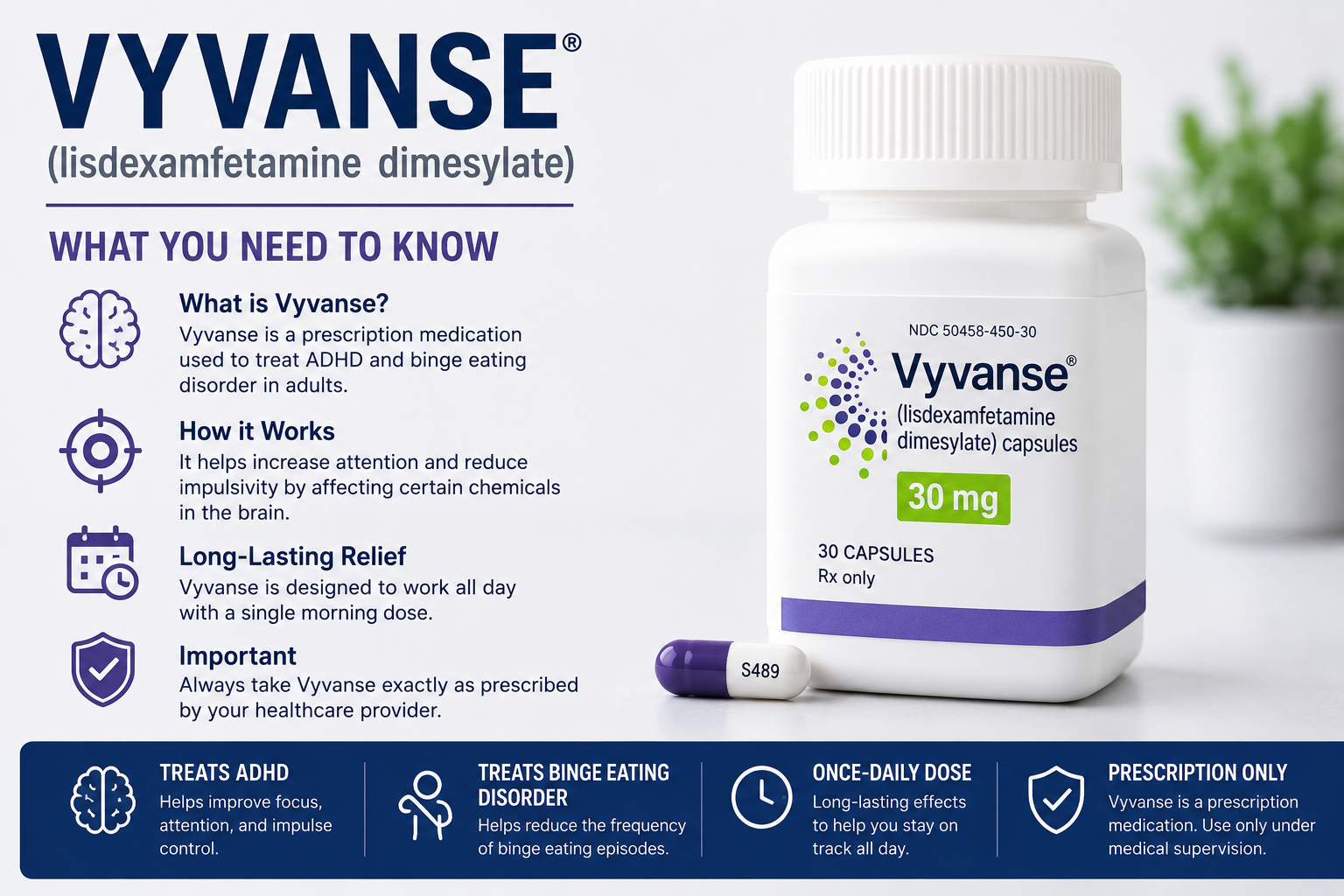
Vyvanse is a prescription central nervious system stimulant medication used to treat attention deficit/hyperactivity disorder (ADHD) In adults and children of 6 years and older as well as severe and moderate binge eating disorder (BAD) in adults.
Its active ingredient is lisdexamfetamine dimesylate, a prodrug that is converted by the body into dextroamphetamine after ingestion.
Doctors prescribe Vyvanse primarily for:
- Attention-Deficit/Hyperactivity Disorder (ADHD)
- Moderate to severe Binge Eating Disorder (BED) in adults
Vyvanse helps regulate certain neurotransmitters involved in attention, impulse control, and behavior. You can also buy methadone buy cliking on visiting out shop page
How Does Vyvanse Work?
Vyvanse increases the activity of neurotransmitters such as:
- Dopamine
- Norepinephrine
These brain chemicals play important roles in:
- Focus
- Attention
- Motivation
- Executive functioning
Unlike some stimulant medications, Vyvanse is inactive until the body converts it into its active form.
This contributes to its longer-lasting effects.
What Is Vyvanse Used For?
ADHD Treatment
Vyvanse is commonly prescribed to children, adolescents, and adults diagnosed with ADHD.
Potential benefits may include:
- Improved concentration
- Better task completion
- Reduced impulsivity
- Improved organization
Binge Eating Disorder
Vyvanse is also approved for treating moderate to severe Binge Eating Disorder in adults.
Some patients experience:
- Reduced binge-eating episodes
- Improved control over eating behaviors
Vyvanse is not approved as a weight-loss medication.
That distinction is important.
How Long Does Vyvanse Last?
Many people ask:
“How long does Vyvanse stay active?”
Effects typically last:
- Up to 14 hours in some adults
- Around 10–13 hours for many patients
Individual responses vary based on:
- Dosage
- Metabolism
- Age
- Overall health
Vyvanse Dosages
Vyvanse is available in multiple strengths, including:
- 10 mg
- 20 mg
- 30 mg
- 40 mg
- 50 mg
- 60 mg
- 70 mg
Doctors determine dosage based on:
- Diagnosis
- Treatment goals
- Patient response
- Side effects
Higher doses do not automatically produce better results.
Common Side Effects of Vyvanse
Like all medications, Vyvanse may cause side effects.
Common Side Effects
- Decreased appetite
- Dry mouth
- Insomnia
- Anxiety
- Irritability
- Increased heart rate
- Nausea
Many side effects improve as the body adjusts.
Serious Side Effects
Seek medical attention for symptoms such as:
- Chest pain
- Shortness of breath
- Severe mood changes
- Hallucinations
- Signs of allergic reaction
Vyvanse and Appetite
One reason Vyvanse receives attention online is its effect on appetite.
Many users report:
- Reduced hunger
- Smaller food intake
- Weight loss
However, Vyvanse is not approved solely for weight management.
Using prescription stimulants without medical supervision carries risks.
Vyvanse vs Adderall
People frequently compare Vyvanse and Adderall.
Vyvanse
- Prodrug formulation
- Longer duration
- Gradual onset
Adderall
- Mixed amphetamine salts
- Faster onset
- Shorter duration in some formulations
The best option depends on individual medical needs.
Who Should Not Take Vyvanse?
Vyvanse may not be suitable for everyone.
Talk with a healthcare professional if you have:
- Heart disease
- High blood pressure
- Glaucoma
- History of substance misuse
- Certain psychiatric conditions
Medication decisions should always be individualized.
Frequently Asked Questions
Is It addictive?
Vyvanse is classified as a controlled substance and has potential for misuse and dependence.
Can It help adults with ADHD?
Yes. Many adults receive Vyvanse as part of ADHD treatment plans.
Does Vyvanse cause weight loss?
Some individuals experience weight loss due to decreased appetite, but it is not approved specifically for weight loss.
How quickly does It start working?
Many people begin noticing effects within a few hours after taking a dose.
Can It be taken every day?
Many patients take Vyvanse daily as prescribed by their healthcare provider.